

📑 Table of Contents
Compact Cement Mixer Blade Wear sneaks up on most operators. The paddles live inside the drum. They spin out of sight. Nobody checks them. The machine keeps running. The concrete keeps pouring. Then the mix goes bad. Lumps show up. Dry patches appear. The pour fails. The blades were shot the whole time.
Worn blades wreck more than the mix. The drum stops cleaning itself. The motor drags. Fuel burns quicker. Repairs pile up. All from a small part that costs very little to swap out.
The good news? Worn blades throw clear signals. Catch them early and the fix stays cheap. Five warnings are covered below. Each one shows up easy. Each one means replacement time. Check the blades. Swap them when worn. The mixer keeps working.
1. Lumpy, Uneven Concrete Mixes
Lumpy concrete ranks first when checking for Compact Cement Mixer Blade Wear. Worn paddles cannot fold material right. Dry cement clumps stay dry. Sand refuses to blend. Gravel sinks to the bottom. The batch comes out patchy.
Fresh blades scoop from the floor. They fold material back in. They smash clumps apart. Worn blades just glide over the surface. No scooping. No folding. No blending.
Watch the pour. Dry pockets stand out. Cement clumps show up. Gravel piles in one corner. Any of these means poor blending. The blades are the usual suspect.
Squeeze a handful. Good mix holds shape. Bad mix crumbles. It feels gritty. It has dry spots. The blades are not pulling their weight.
Pop the drum open. Look at the paddle edges. Worn edges look smooth. Fresh edges look sharp and angled. Swap the worn set. Mix quality comes back fast.
2. Longer Mixing Times
Mixing should clock the same time every batch. Five minutes. Maybe six. When batches stretch to eight or ten, something shifted. Compact Cement Mixer Blade Wear sits high on the cause list.
Worn paddles move material poorly. The drum spins fine. The blades turn fine. The folding action goes weak. The batch takes longer to blend. Extra minutes burn extra fuel. The motor wears faster too.
✨ Pro Tip: Timing Your Mix
Time a batch. Write down the minutes to reach proper consistency. Repeat the test every few weeks. Compare the numbers. A steady climb points at the blades. Longer mixing strains the motor.
Longer mixing strains the motor. Heat builds. Bearings wear. Fuel disappears. All traced back to Compact Cement Mixer Blade Wear. Early action saves money on several fronts.
Check the blades when times climb. Flat spots show up. Bent paddles show up. Loose bolts show up. Tighten the bolts first. Worn blades need replacement. Normal mixing times return.
3. Concrete Sticking Inside the Drum
Clean drums dump concrete easy. Mix slides out. Little clings to the walls. Compact Cement Mixer Blade Wear flips this. Material sticks. It builds. It hardens. Cleaning eats up time.
Fresh blades scrub as they spin. They push material against the walls. They scrape it back into the batch. Worn blades lose this scrub. Material sticks and stays put.
Look inside after a pour. Stuck material on the walls stands out. Buildup hides behind the paddles. Hardened patches show up. These point straight at Compact Cement Mixer Blade Wear.
Buildup adds weight. Balance goes off. The motor strains. Capacity drops. Hardened chunks get harder to remove. The cycle worsens each week.
Check blades when buildup appears. Worn blades cannot scrub. Replace them. The scrubbing action returns. The drum stays cleaner. Cleaning gets quicker.
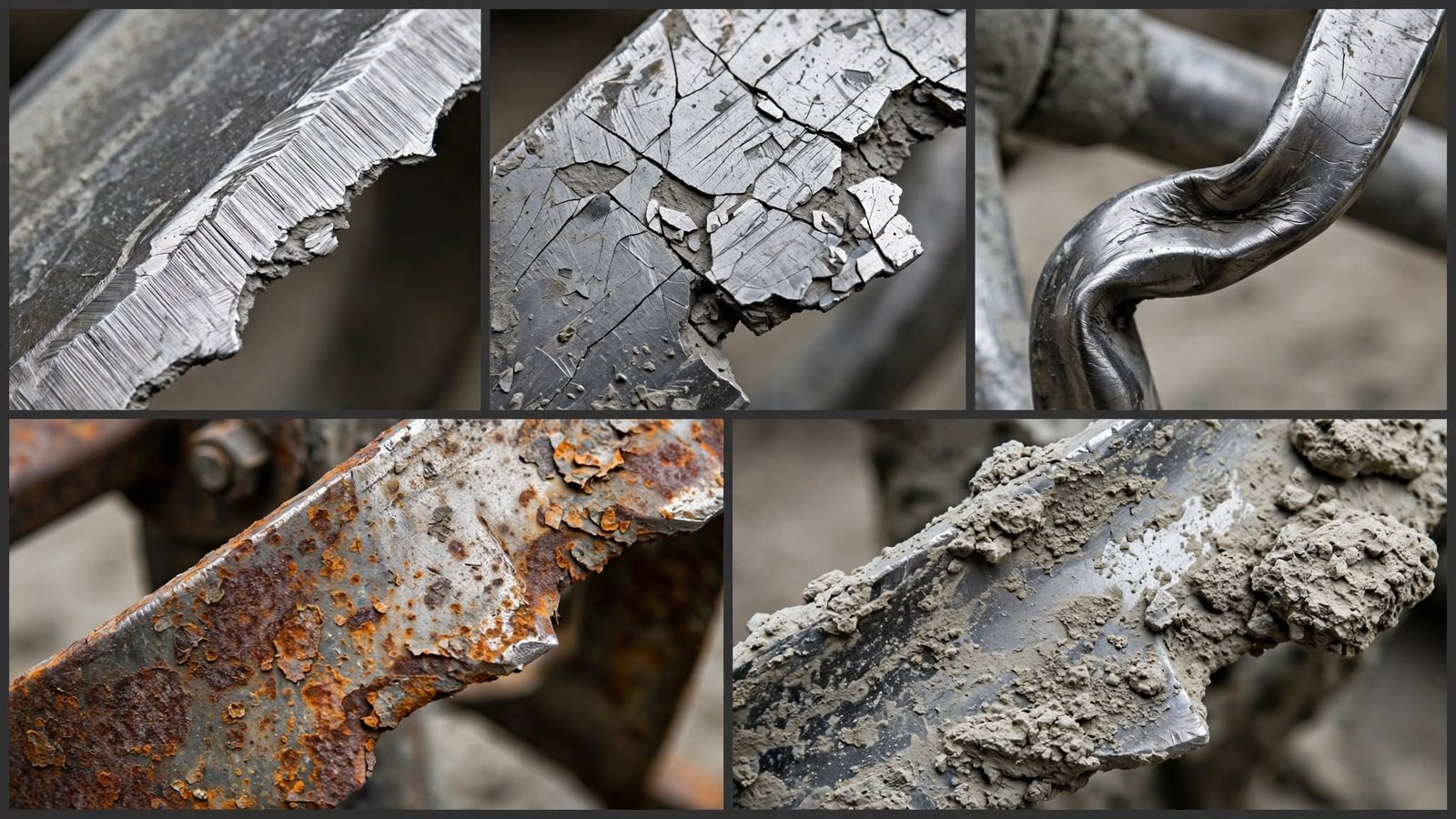
4. Visible Flat Spots or Rounded Edges
Compact Cement Mixer Blade Wear happens slowly. Edges round off. Tips flatten. The angle fades. Such Compact Cement Mixer Blade Wear shows up on a close look. No tools needed to spot the worst of it.
New blades come sharp. Angled edges bite the mix. They fold material well. Worn blades look different. Smooth edges. Round tips. No angle left.
Check for Compact Cement Mixer Blade Wear monthly. Kill the power first. Disconnect the cord. Look inside the drum. Examine every paddle. Compare against a fresh blade. Manual photos help.
Measure thickness with a caliper. Most makers list a minimum. Below the minimum means replacement. Above means more life. Exact numbers beat guessing.
Hunt for cracks. Hunt for bends. Hunt for missing chunks. Any of these means swap it now. Cracked blades snap off. Broken pieces wreck the drum. They wreck the motor. They hurt people.
Fix Compact Cement Mixer Blade Wear before failure. New blades cost little. New drums cost plenty. The math stays simple.
5. Strange Noises During Mixing
Normal mixing sounds steady. Motor hums. Drum turns. Mix tumbles. Compact Cement Mixer Blade Wear changes the soundtrack. Grinding. Scraping. Rattling. Those noises mean trouble.
Worn blades sit differently inside. They scrape walls. They rattle against the drum. They grind on each other. The sounds stand out. They grow louder over weeks.
Listen while the machine runs. Stand close. Catch any change. New noise means new problem. Compact Cement Mixer Blade Wear ranks high on the list.
Loose blade bolts also make noise. The blade shifts. It rattles. It grinds. Check bolts first. Tighten them. Noise continues? It is likely Compact Cement Mixer Blade Wear.
Bent blades add noise too. A bent blade slaps the drum. It scrapes. It grinds. Look for bends. Straighten if possible. Replace if bent badly.
Noise breeds damage. Scraping wears the drum. Grinding wears the motor. Rattling loosens bolts. Kill the cause. Swap worn blades. Noise stops. Damage stops.
Why Compact Cement Mixer Blade Wear Matters
Compact Cement Mixer Blade Wear touches everything. Mix quality drops. Fuel use climbs. Motor strain rises. Drum wear speeds up. Repair bills stack. All from a cheap part.
| Symptom | Underlying Cause |
|---|---|
| Lumpy Concrete | Blades can no longer fold material effectively. |
| Longer Mix Times | Worn blades drag without properly blending the mix. |
| Drum Buildup | Lost scrubbing action leaves concrete stuck to walls. |
Good blades mix fast. They clean the drum. They ease motor strain. They save fuel. They stretch equipment life. The payoff shows up quick.
Checking for Compact Cement Mixer Blade Wear takes minutes. A monthly peek catches wear early. Swapping takes under an hour. Cost stays low. Benefit runs high. Skipping checks costs far more down the road.
How to Check Blades Properly
Follow these steps for a solid inspection.
- Kill the machine. Pull the cord. Safety comes first.
- Open the drum. Shine a light inside. Shadows hide Compact Cement Mixer Blade Wear.
- Study every paddle. Check edges. Check tips. Check mounting bolts.
- Measure thickness. Grab a caliper. Compare against manual specs.
- Hunt cracks. Hunt bends. Hunt missing pieces.
- Test the bolts. Wiggle each blade. Loose blades need tightening. Worn blades need swapping.
- Write it down. Date the check. Note the condition. Track Compact Cement Mixer Blade Wear over months.
Ten minutes covers the whole routine. It blocks big problems. Run it monthly.
Replacement Tips
Swapping blades stays simple. Follow these pointers.
Buy the right blades. Match the model number. Generic blades fit poorly. Poor fit causes trouble.
Swap all blades together. Mixed Compact Cement Mixer Blade Wear throws balance off. New blades work best as a set.
Tighten bolts right. Use a torque wrench. Follow manual specs. Over-tightening strips threads. Under-tightening lets blades fly loose.
Test after the swap. Run the mixer empty. Listen for noise. Feel for vibration. Fix issues before concrete goes in.
Swap blades every one to two years. Heavy use needs faster changes. Light use stretches the interval. Regular checks for Compact Cement Mixer Blade Wear reveal the timing.
Final Thoughts
Compact Cement Mixer Blade Wear shows clear signals. Lumpy mixes. Longer mixing times. Concrete sticking inside. Flat spots and rounded edges. Strange noises.
Each signal means replacement. Catch them early. Swap worn blades. The mixer runs better. Concrete comes out strong. The motor lasts longer. The fuel bill drops.
Blades cost little. Repairs cost plenty. Check for Compact Cement Mixer Blade Wear monthly. Swap them when worn. The investment pays back fast. The mixer keeps running. The work keeps moving. For more equipment insights, explore our skid steer models guide.



[…] For light digging, trenching, or landscaping, these TYPHON Mini Excavators do the job. It keeps the upfront cost low. Small contractors can buy it outright without a massive loan. Homeowners with large properties buy it for personal use. It pays for itself in a few jobs compared to renting equipment. […]