
📑 Table of Contents
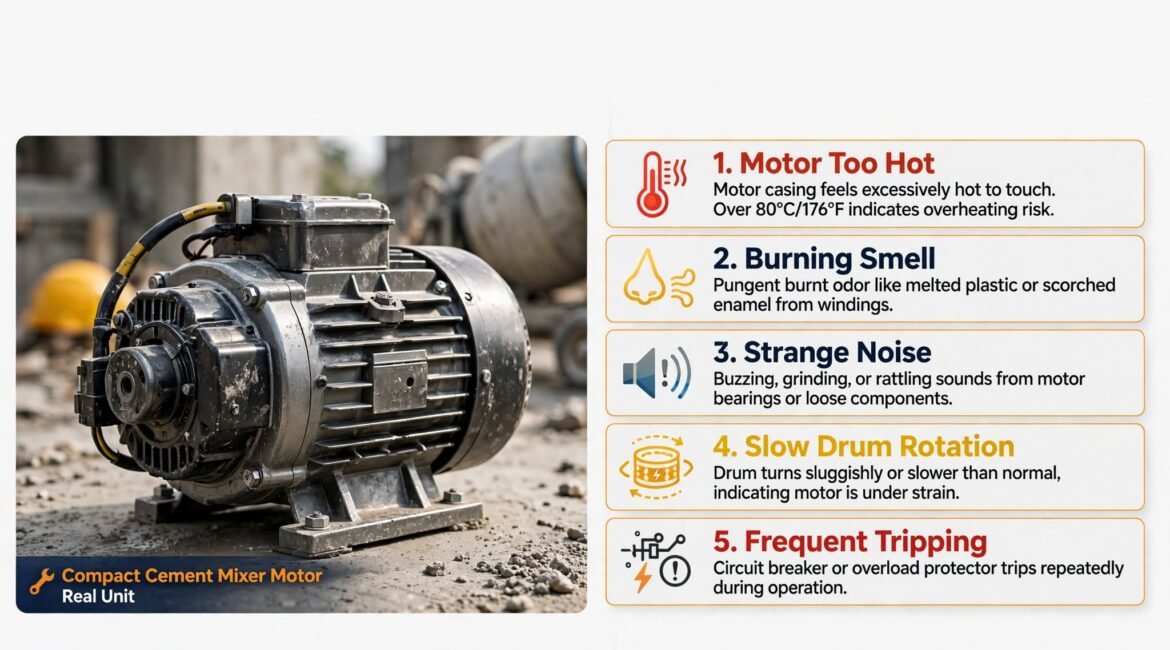
Compact cement mixer motor overheating fixes start with knowing the signs. A motor does not fail without warning. It gives signals first. Strange noises. Burning smells. Slow mixing. Most operators ignore these signs. They keep running the machine. Then the motor dies. Repair costs hit hard. Replacement costs hit harder.
When it comes to cement mixer motor overheating, heat kills motors. Every motor has a safe temperature range. Cross that range and damage begins. Bearings warp. Windings melt. Insulation breaks down. With cement mixer motor overheating, the damage happens fast. A motor that ran fine yesterday can quit today. All because the warning signs got missed.
The good news is that cement mixer motor overheating is preventable. The warning signs show up early. Catching them saves the motor. The five signs below cover what to watch for. Each one is easy to spot. Each one points to a specific fix. Learn the signs. Apply the fixes. Keep the motor running for years.
1 — Watch for Burning Smells
When dealing with cement mixer motor overheating, a burning smell is the clearest warning. Hot motors produce a distinct odor. It smells like scorched wire. It smells like melted plastic. It smells like something wrong. Never ignore this smell.
The smell comes from overheating insulation. Motor windings are coated in insulation. Heat breaks it down. The coating burns. The smell escapes through the vents. By the time the smell shows, damage has started.
To prevent cement mixer motor overheating, stop the machine right away. Do not finish the batch. Do not push through. Every minute of running makes it worse. Shut it down. Unplug the cord. Let the motor cool completely. This takes thirty minutes or more.
After cooling, check the vents. Dust blocks airflow. Concrete dust builds up fast. Blocked vents trap heat. Clean the vents with compressed air. A soft brush works too. Never use water on a hot motor. Water on hot metal cracks parts.
Check the load, as it often causes cement mixer motor overheating. Too much concrete strains the motor. Overloading causes heat. Mix smaller batches. Give the motor a break. Light loads run cool. Cool motors last.
If the smell returns after cleaning, the damage is done. Windings may be burned. The motor needs professional repair or replacement. Catching the smell early prevents this.
2 — Listen for Strange Noises
Motors make noise. Normal noise is steady. It hums. It whirs. It sounds the same every time. Strange noises are different. Grinding. Screeching. Rattling. These sounds mean trouble.
✨ Pro Tip: Diagnosing Noises
Grinding points to bearings. Bearings let the shaft spin. Worn bearings grind. They create friction. Friction creates heat. Such heat leads directly to cement mixer motor overheating. Grinding gets louder over time. Catch it early and bearings can be replaced.
Screeching points to the belt or coupling. A loose belt slips. It screeches. A worn coupling rattles. Both cause strain. Strain creates heat. Tighten the belt. Replace the coupling. Fix the cause.
Rattling points to loose parts. Bolts work loose from vibration. Loose bolts let parts shift. Shifting parts rub. Rubbing creates heat. Tighten all bolts. Check them regularly. Loose bolts cause big problems.
Listen during operation. Stand near the mixer. Listen for changes. A new noise means a new problem. Stop the machine. Find the source. Fix it fast. Small fixes prevent big failures.
Never run a noisy motor to avoid cement mixer motor overheating. The noise will not go away. It will get worse. The damage will spread. Fix it now. Save the motor.
3 — Check for Slow Mixing Speed
During cement mixer motor overheating, a hot motor loses power. It cannot spin the drum fast. Mixing slows down. The batch takes longer. This is a clear warning sign.
Normal mixing speed stays steady. The drum turns at the same RPM every time. If the speed drops, something is wrong. The motor is struggling. It is suffering from cement mixer motor overheating. It needs attention.
Check the load first. Too much concrete strains the motor. Overloading is the most common cause. Dump some material. Mix a smaller batch. See if speed returns. If it does, the problem was the load. If not, look deeper.
Check the power supply. Low voltage makes motors struggle. A long extension cord causes voltage drop. A thin cord causes the same. Use a short, thick cord. Plug directly into an outlet when possible. Proper voltage keeps the motor cool.
Check the capacitor. Many motors have a start or run capacitor. A weak capacitor causes slow starts. It causes poor performance. It causes heat. Replace a weak capacitor. It costs little. It saves the motor.
Check the drum. A jammed drum strains the motor. Concrete chunks jam the paddles. Hardened material blocks rotation. Clean the drum. Remove obstructions. A free drum spins easy. Easy spinning runs cool.
If speed stays slow after all checks, the motor is damaged. Windings may be failing. The motor needs repair or replacement. Catching slow speed early prevents this.
4 — Feel for Excessive Heat
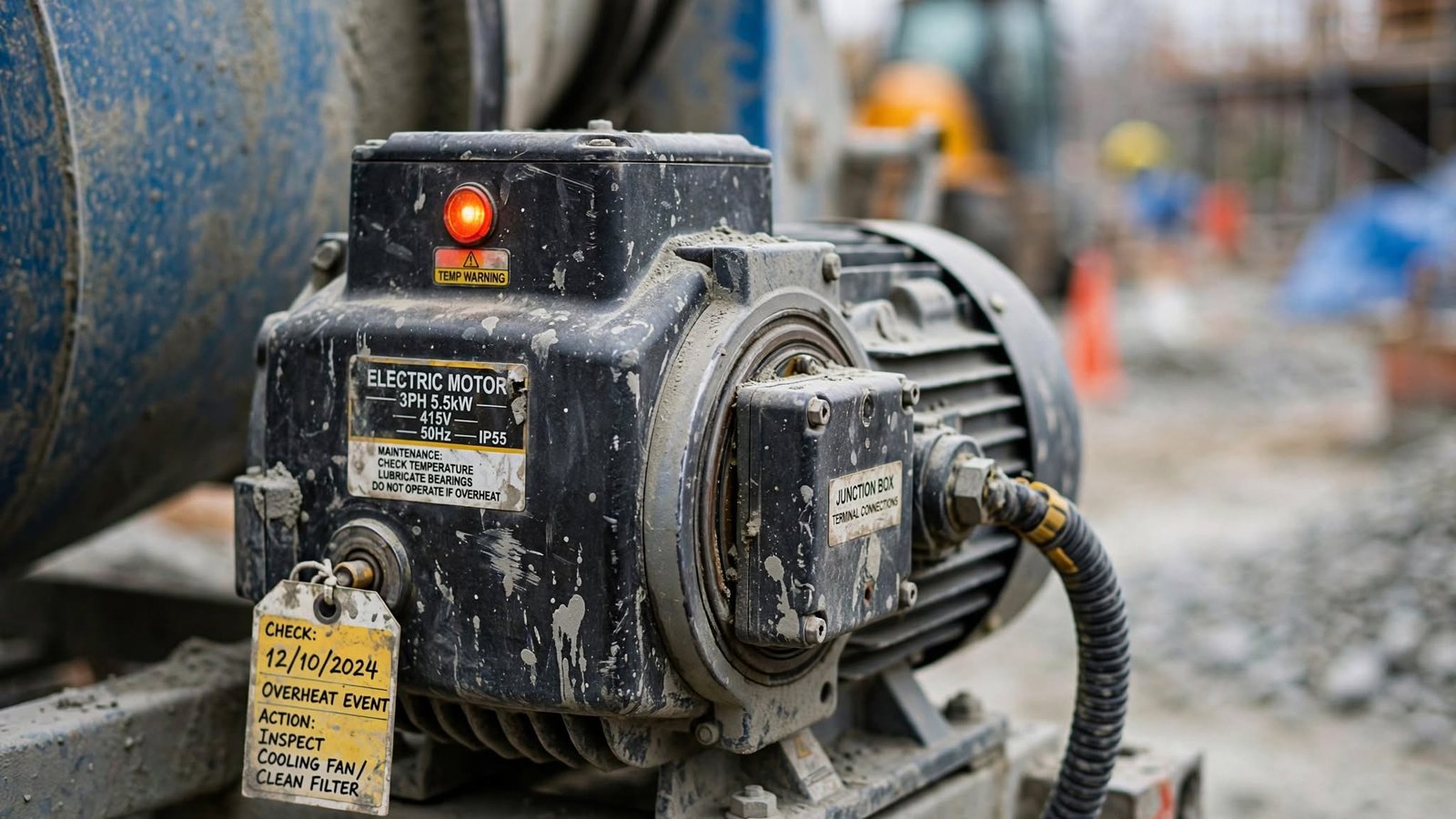
Touch tells the story. A normal motor runs warm. A hot motor runs too hot. The difference is clear. If the motor burns a hand, it indicates cement mixer motor overheating.
Check the motor after running. Touch the housing carefully. Use the back of the hand. A quick tap tells the temperature. Warm is fine. Hot is not. Burning is danger.
Many motors have a rated temperature. Check the manual. Some allow 140 degrees Fahrenheit. Some allow more. Some allow less. Know the limit. Stay under it.
Heat has causes. Blocked vents trap heat. Overloading creates heat. Worn bearings create heat. Poor voltage creates heat. Find the cause. Fix the cause. Heat goes away.
Improve airflow. Move the mixer to open air. Do not run it in a closed space. Do not block the vents. Keep the area around the motor clear. Airflow carries heat away. Good airflow keeps the motor cool.
Add a cooling break. Long mixing sessions build heat. Run for thirty minutes. Let the motor cool for ten. This simple habit extends motor life. It prevents cement mixer motor overheating.
If the motor stays hot after all fixes, the damage is done. Insulation may be failing. The motor needs professional attention. Early action saves money.
5 — Watch for Smoke or Sparks
Smoke and sparks are emergency signs. Stop the machine immediately. Do not wait. Do not finish the batch. Shut it down. Unplug the cord. Move away.
Smoke comes from burning insulation. The windings are suffering from cement mixer motor overheating. The damage is severe. Continuing to run makes it worse. The motor may catch fire. Fires spread fast. They destroy equipment. They injure people.
Sparks come from electrical faults. Worn brushes spark. Damaged windings spark. Loose connections spark. Sparks can ignite dust. Dust explodes. The risk is real.
After stopping, do not restart. Let the motor cool. Inspect the damage. Look for burned wires. Look for melted parts. Look for blackened areas. Any of these means the motor is done. Repair or replace it.
Call a professional for electrical repairs. Do not attempt DIY fixes on motor windings. The risk of shock is high. The risk of fire is high. Professionals have the tools. They have the training. Pay them. Stay safe.
Prevent smoke and sparks with regular care. Clean vents. Check cords. Replace worn brushes. Tighten connections. These steps cost little. They prevent disasters.
Why Cement Mixer Motor Overheating Happens
Heat has causes. Knowing them prevents cement mixer motor overheating.
| Overheating Cause | Quick Solution |
|---|---|
| Overloading | Mix smaller batches. Stay within the rated capacity. |
| Blocked vents | Clean the vents regularly. Keep the motor area clear. |
| Low voltage | Use short, thick cords. Plug into a proper outlet. |
| High ambient temperature | Run in shade when possible. Take breaks. |
Worn bearings create friction. Friction creates heat. Replace worn bearings. Lubricate them properly. Smooth bearings run cool.
Low voltage strains the motor. Long cords cause voltage drop. Thin cords cause the same. Use short, thick cords. Plug into a proper outlet.
Dirty power causes problems. Voltage spikes damage windings. Surges cause heat. Use a surge protector. It costs little. It saves the motor.
High ambient temperatures add heat. Running a mixer in direct sun strains the motor. Run in shade when possible. Take breaks. Let the motor cool.
Each cause is fixable. Fix them. Avoid cement mixer motor overheating to extend motor life.
Preventive Maintenance for Motors
Prevention beats repair. Follow this routine.
- Before each use. Check the vents. Look for dust. Look for blockages. Clean if needed.
- Before each use. Check the cord. Look for damage. Look for frays. Replace if worn.
- Every week. Check the bolts. Tighten loose ones. Vibration loosens them.
- Every month. Lubricate bearings. Use the right grease. Follow the manual.
- Every season. Inspect brushes. Replace worn ones. Check the capacitor. Replace weak ones.
- Every year. Professional inspection. A technician checks windings. Checks insulation. Catches problems early.
This routine takes little time. It prevents cement mixer motor overheating. It extends motor life. It saves money.
Final Thoughts
Compact cement mixer motor overheating fixes start with the signs. Burning smells. Strange noises. Slow mixing. Excessive heat. Smoke or sparks.
Each sign points to a problem. Each problem has a fix. Catch the signs early. Apply the fixes fast. Save the motor.
Prevention matters most. Clean vents. Check cords. Lubricate bearings. Avoid overloading. Use proper power. These habits prevent cement mixer motor overheating.
Avoiding cement mixer motor overheating ensures a cool motor runs for years. A hot motor dies fast. The choice is simple. Watch the signs. Fix the problems. Keep the mixer running.
