
📑 Table of Contents
- Introduction
- 1 — Never Let the Engine Idle Unnecessarily
- 2 — Maintain the Air Filter and Spark Plug
- 3 — Use the Right Fuel and Keep It Fresh
- 4 — Reduce Load and Mix Efficiently
- 5 — Store and Transport the Mixer Properly
- Why Fuel Savings Matter
- Common Fuel Wasting Mistakes
- Fuel Saving Checklist
- Long Term Fuel Savings
- Final Thoughts
- Our Business Partner
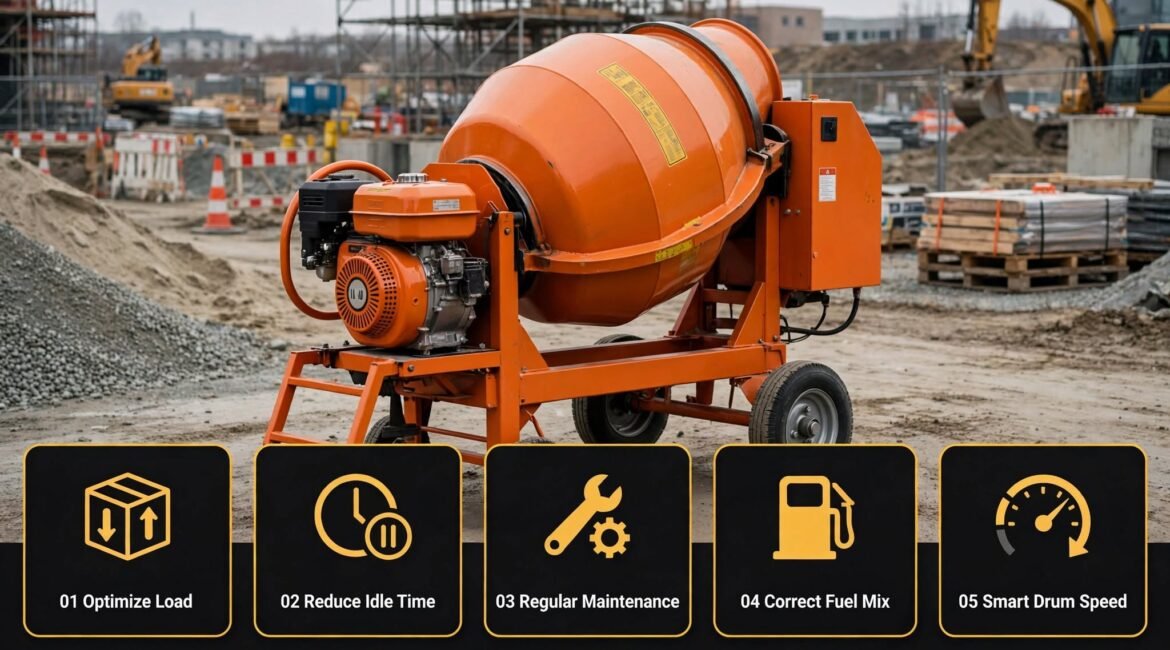
Compact Cement Mixer Fuel Saving Tips save real money. Gas prices climb. Job budgets shrink. Every dollar burned is a dollar lost. Small changes add up fast.
A gas mixer burns fuel every minute. Idling wastes gas. Bad maintenance wastes gas. Poor habits waste gas. Most operators never notice. They fill the tank. They start the engine. They work. The fuel bill shocks them later.
Compact Cement Mixer Fuel Saving Tips do not need expensive upgrades. No new engine. No special additives. Just practical habits. These habits cut consumption. They keep performance. The five tips below cover the biggest wasters. Each one is simple. Each one saves money.
1 — Never Let the Engine Idle Unnecessarily
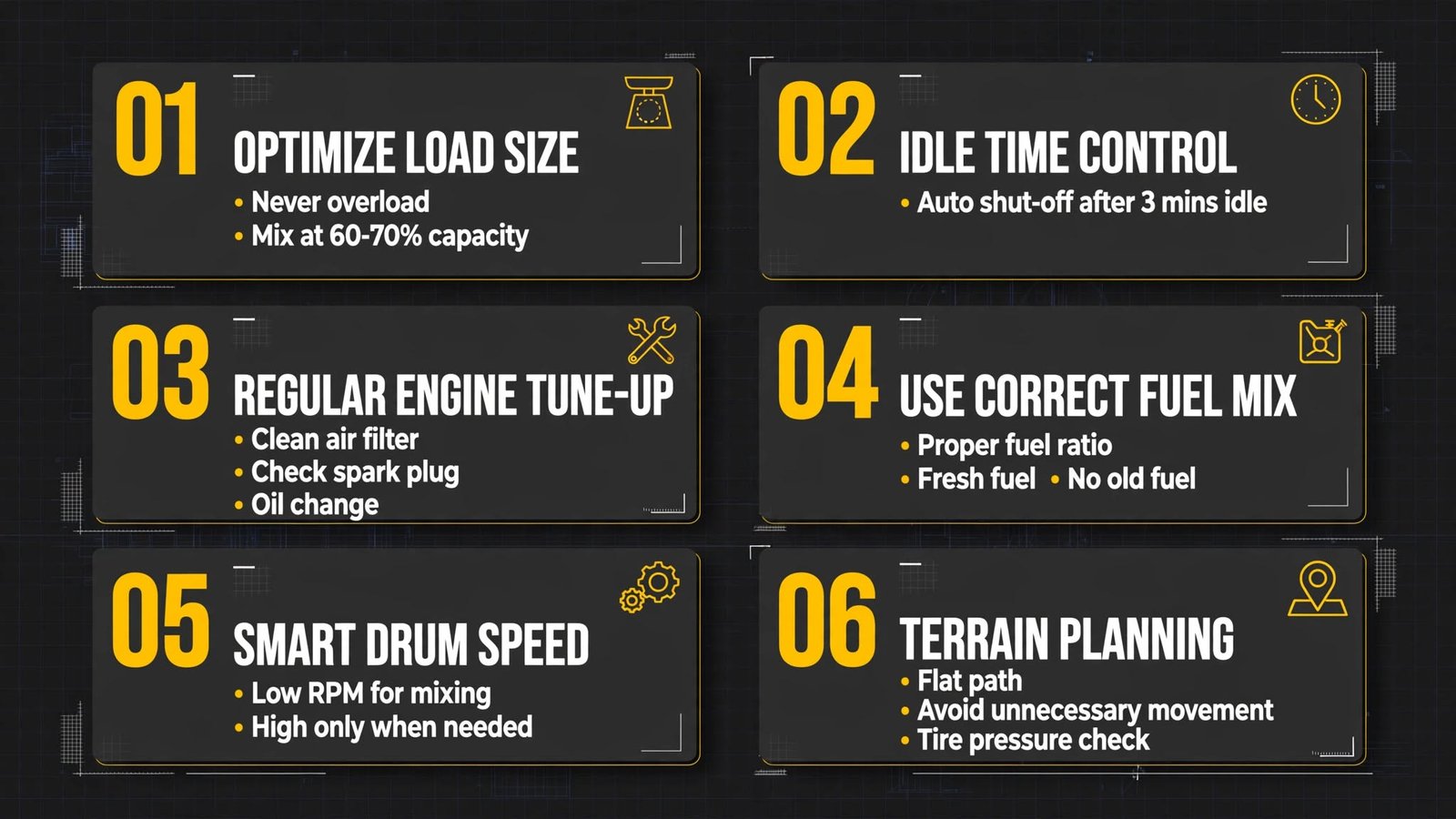
According to Compact Cement Mixer Fuel Saving Tips, idling is the biggest fuel waster. A running engine burns gas. No mixing means no reason to run. Ten minutes here. Fifteen minutes there. A full day wastes a gallon or more.
The rule is simple. No mixing? Shut it off. Loading materials takes time. Use that time to save fuel. Shut down. Load the drum. Start up. Mix. Shut down. Pour. Start up. Mix again.
Some operators worry about restarting. They think starting uses more fuel. That is a myth. Modern starters crank fast. Restart fuel is tiny. Minutes of idling burn far more.
Break time? Shut it down. Phone call? Shut it down. Waiting for materials? Shut it down. This one habit cuts fuel use by 15 to 20 percent. No tools needed. No cost. Just discipline.
Cold starts matter too when discussing Compact Cement Mixer Fuel Saving Tips. A cold engine burns extra fuel until it warms. Let it warm for one minute. No more. Long warm-ups waste gas. Short warm-ups save it.
Plan the work to maximize Compact Cement Mixer Fuel Saving Tips. Group mixing tasks together. One long mixing session uses less fuel than five short ones. The engine stays warm. Warm engines run efficient. Efficient engines save fuel.
2 — Maintain the Air Filter and Spark Plug
Ignoring Compact Cement Mixer Fuel Saving Tips like cleaning a dirty air filter chokes the engine. The engine pulls harder for air. It burns more fuel. A clogged filter increases fuel use by 10 percent or more. Cleaning takes five minutes.
Check the filter every few uses to follow Compact Cement Mixer Fuel Saving Tips. Tap it out. Blow air through it. Replace it when dark. A clean filter breathes easy. Easy breathing saves fuel.
Foam filters need oil. Paper filters stay dry. Check the manual. Use the right type. Wrong filters cause problems. Problems waste fuel.
The spark plug matters too for effective Compact Cement Mixer Fuel Saving Tips. A worn plug fires weak. Weak spark means incomplete burn. Unburned fuel exits the exhaust. That is wasted money. Replace the plug each season. Check the gap. Set it right.
Carbon buildup on the plug causes misfires. Misfires waste fuel. Clean the plug with a wire brush. Replace it if worn. New plugs cost little. They save a lot.
These parts cost almost nothing. A filter costs a few dollars. A plug costs a few more. The savings pay for them fast.
3 — Use the Right Fuel and Keep It Fresh
Gas goes bad. It sits in the tank. It breaks down. It forms gum. Old gas burns poorly. It clogs carburetors. It wastes fuel. It damages the engine.
Use fresh gas, one of the most effective Compact Cement Mixer Fuel Saving Tips. Buy only what gets used in a month. Store gas in a sealed can. Keep it cool. Add stabilizer for longer storage. Stabilizer keeps gas fresh for months.
✨ Fuel Quality Tip
Use the right octane. Most small engines run on regular. Premium does not help. It just costs more. Check the manual. Use what it says. Ethanol-free gas works best. Ethanol attracts water. Water causes rust.
Never mix old gas with new. Drain the tank first. Old gas contaminates new. It causes poor combustion. It wastes fuel.
Water in gas causes sputtering. It causes stalls. It causes poor performance. Check for water in the tank. Drain it if found. Fresh gas fixes the problem.
Fuel lines crack over time. Cracked lines leak fuel. Leaking fuel wastes money. Check lines each season. Replace cracked ones. New lines cost little. They save fuel.
4 — Reduce Load and Mix Efficiently
As emphasized in Compact Cement Mixer Fuel Saving Tips, a mixer burns more fuel under heavy loads. Overloading strains the engine. The engine burns extra fuel. Smaller batches reduce load. They save fuel.
Do not fill past the rated capacity. A 5-cubic-foot drum holds 5 cubic feet. Not 6. Not 7. Overloading spills. It strains. It wastes fuel.
Mix only what gets used. Leftover concrete gets dumped. The fuel used to mix it gets wasted. Plan the pour. Calculate the amount. Mix that amount. No more.
Run the mixer at proper speed. Most engines have a throttle setting. Full throttle when half works wastes fuel. Check the manual. Use the right setting.
Combine batches when possible. One large batch uses less fuel than two small ones. The engine warms once. It runs efficient. It saves fuel.
Wet mixes strain harder than dry. Add water slowly. Too much water strains the engine. It wastes fuel. The right consistency mixes easy. Easy mixing saves gas.
Sharp mixing paddles work better. Dull paddles drag. Dragging strains the engine. Check paddles each season. Replace worn ones. Sharp paddles save fuel.
5 — Store and Transport the Mixer Properly
Storage affects fuel use, which is a major part of Compact Cement Mixer Fuel Saving Tips. A dirty mixer runs harder. A poorly stored mixer starts hard. Both waste fuel.
Clean the mixer after every use. Concrete buildup adds weight. Extra weight means extra load. Extra load means extra fuel. A clean mixer runs light. It burns less.
Store indoors or under cover. Rain causes rust. Rust in the fuel system causes problems. A covered mixer starts easy. Easy starts save fuel.
Check tire pressure before moving. Low tires drag. Dragging makes the engine work. Hard work burns fuel. Proper pressure rolls easy. Easy rolling saves fuel.
Transport the mixer right. Secure it on a trailer. A bouncing mixer spills fuel. It damages lines. Loose mixers waste fuel. They are dangerous too.
Drain fuel before long storage. Old gas in the tank goes bad. Bad gas clogs carburetors. Clogged carburetors waste fuel. Drain the tank. Run the engine until it stops. This clears the fuel lines. It prevents gum buildup.
Cover the mixer with a breathable tarp. Plastic traps moisture. Moisture causes rust. Breathable covers let air flow. They keep rain off. They prevent rust.
Why Fuel Savings Matter
Following Compact Cement Mixer Fuel Saving Tips is vital because fuel costs add up. A mixer running five days a week burns a lot. At current prices, that is hundreds per month. Over a year, it is thousands.
Contractors who track fuel see the difference. Small changes cut costs by 20 to 30 percent. That money goes back into the business. It pays for tools. It pays for materials. It pays for profit.
DIYers save too. A weekend project uses less gas. The savings pay for concrete. They pay for a cold drink at the end.
Compact Cement Mixer Fuel Saving Tips help the environment too. Less fuel burned means fewer emissions. Small engines pollute more than cars. Every gallon saved matters.
Compact Cement Mixer Fuel Saving Tips extend engine life. Less strain means less wear. Less wear means fewer repairs. Fewer repairs mean more money saved. The benefits stack up.
Common Fuel Wasting Mistakes
Despite knowing Compact Cement Mixer Fuel Saving Tips, certain mistakes show up again and again. Knowing them helps avoid them.
| Mistake | Impact & Fix |
|---|---|
| Letting the engine idle | Wastes the most gas. Shut it down when not mixing. |
| Skipping air filter checks | A key rule in Compact Cement Mixer Fuel Saving Tips is that a dirty air filter chokes the engine. |
| Using old gas | Burns poorly and damages engine. Use fresh fuel. |
| Overloading the drum | Too much material strains the engine. Stick to capacity. |
Running full throttle when not needed. Match throttle to the job. Save fuel. Storing outside. Rust and dirt cause problems. Problems waste fuel. Store covered.
Ignoring tire pressure. Low tires drag. Dragging burns fuel. Check pressure. Skipping spark plug changes. Worn plugs waste fuel. Replace them each season.
Mixing too much concrete. Leftovers get dumped. The fuel used to mix them gets wasted. Mix only what gets used.
Letting the engine run during breaks. Breaks mean no mixing. No mixing means no reason to run. Shut it down. Each mistake is easy to fix. Fix them. Save fuel. Save money.
Fuel Saving Checklist
Run through this list before every use.
- Engine off when not mixing
- Air filter clean
- Spark plug good
- Fresh gas in tank
- Stabilizer added if storing
- Drum not overloaded
- Throttle at proper setting
- Mixer clean
- Tires at proper pressure
- Mixer stored under cover
This list takes two minutes. It saves fuel every time. It pays for itself fast.
Long Term Compact Cement Mixer Fuel Saving Tips
Small habits become big savings. A contractor running daily saves hundreds per year. A DIYer saves enough to cover project costs.
Use these Compact Cement Mixer Fuel Saving Tips and track fuel for one month. Note how much gets burned. Apply these tips next month. Compare numbers. The difference shows fast.
Applying Compact Cement Mixer Fuel Saving Tips makes sense as fuel prices will not drop. They climb over time. Saving now prepares for higher prices later. Habits built today protect tomorrow.
A mixer that runs efficient lasts longer. Less strain means fewer repairs. Fewer repairs mean more saved. The savings compound.
Teach these habits to helpers. A trained helper shuts the engine off. A trained helper checks the filter. A trained helper saves fuel. Good habits spread. Savings grow.
Final Thoughts
Compact Cement Mixer Fuel Saving Tips are simple. Shut the engine off when not mixing. Maintain the filter and plug. Use fresh fuel. Reduce load. Store properly.
These Compact Cement Mixer Fuel Saving Tips cut fuel costs by 20 to 30 percent. They take almost no effort. They need no expensive parts. They just need consistency.
Every dollar saved is a dollar earned. Contractors keep more profit. DIYers stretch budgets. The machine runs cleaner. The environment benefits. Everyone wins.
Follow these Compact Cement Mixer Fuel Saving Tips. Watch the fuel bill drop. Enjoy the extra money. Keep mixing. Keep saving. Keep building.

[…] more efficient usage, don’t forget to review our fuel saving guide to keep your costs […]