
📑 Table of Contents
- 1 — Keep the Mixer and Materials Warm
- 2 — Use Cold Weather Concrete Mixes
- 3 — Adjust Mixing and Pouring Schedules
- 4 — Maintain the Mixer for Cold Conditions
- 5 — Protect the Concrete After Pouring
- Why Cold Weather Mixing Fails
- Equipment Checks for Winter
- Mixing Tips for Cold Weather
- Safety in Cold Weather
- Storage After Winter Use
- Final Thoughts
- Our Business Partner
Compact Cement Mixer Winter Operation is not the same as summer work. Cold changes everything. Concrete freezes. Machines struggle. Materials harden. What works in July fails in January.
Water turns to ice. Cement stops curing. Grease thickens. Motors strain. Bearings drag. Every part of the job gets harder. A mixer that ran fine in summer refuses to start in winter.
Most operators learn this the hard way. A batch gets mixed. It gets poured. The next morning shows a cracked mess. Or the machine breaks because cold metal gets brittle.
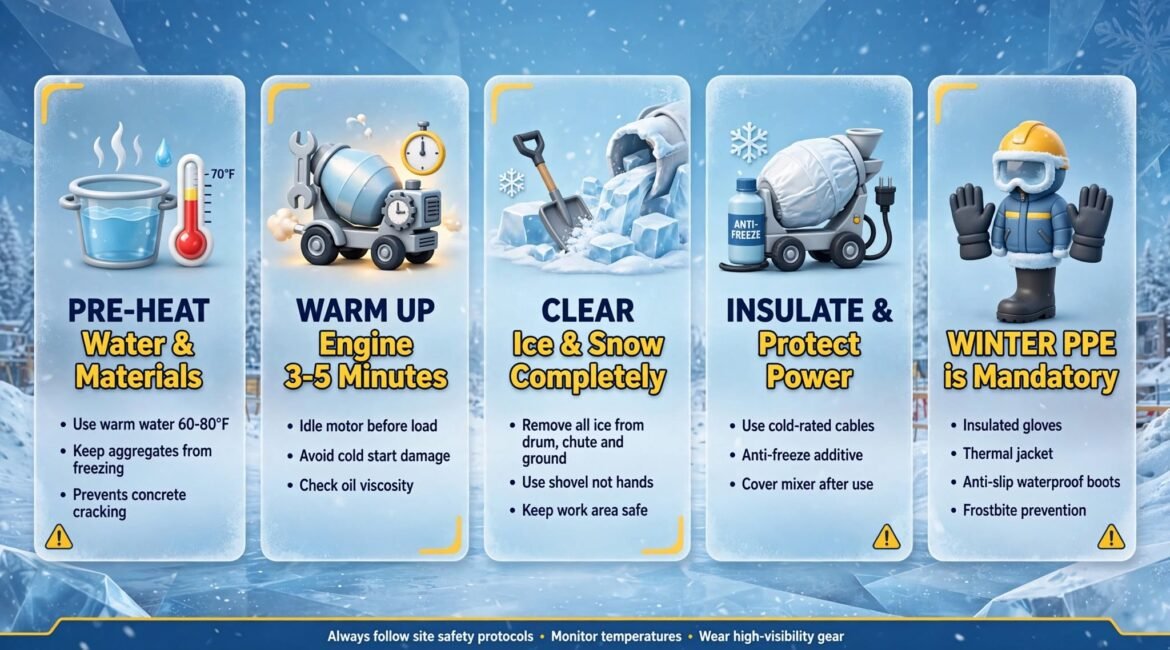
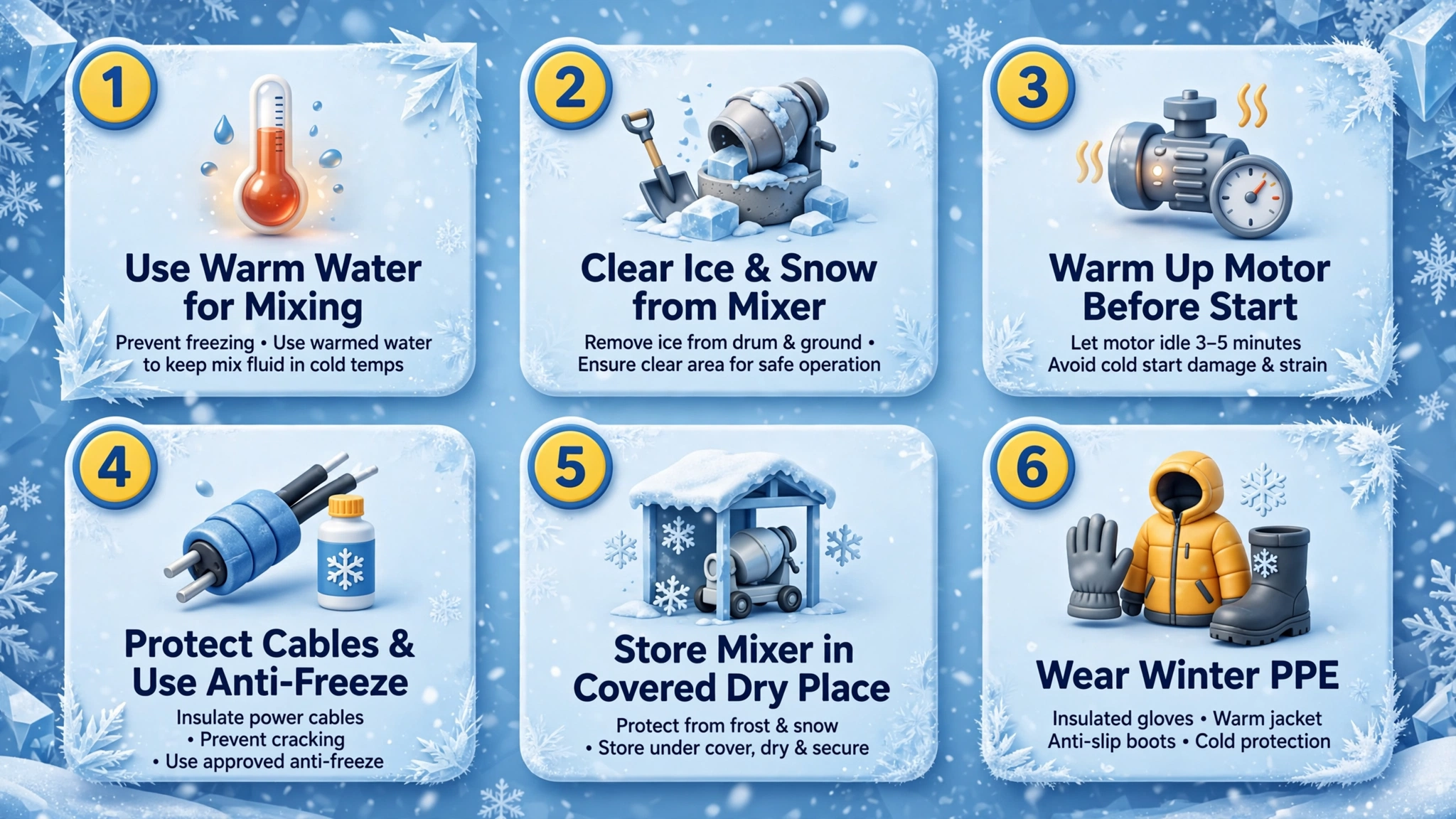
Compact Cement Mixer Winter Operation can work. It just needs different habits. The five tips below cover the important changes. Each one is simple. Each one prevents real problems. Follow them and Compact Cement Mixer Winter Operation goes smooth. Ignore them and results show up fast.
1 — Keep the Mixer and Materials Warm
Cold metal and cold concrete do not mix. Compact Cement Mixer Winter Operation starts with temperature. The machine should sit in a heated space before use. A frozen drum makes mixing almost impossible.
No indoor storage? Cover the mixer with a heavy tarp overnight. This traps heat. It keeps frost off the drum. Before starting, check for ice inside. Ice chunks cause imbalance. They damage paddles.
Materials need warmth too. Cement bags stay indoors. Sand and gravel piles freeze into blocks. Bring materials into a warm space a day before mixing. No warm space? Use warm water in the mix. Warm water speeds curing. It prevents freezing during the pour.
Never use hot water. Hot water flash-sets cement. Lukewarm water works best. Around 70 to 80 degrees is ideal. Cold water slows curing. It increases freeze damage risk.
2 — Use Cold Weather Concrete Mixes
Standard concrete does not handle cold well. Compact Cement Mixer Winter Operation needs special mixes. These mixes contain accelerators. Accelerators speed curing. Faster curing means less freeze damage.
Ask a supplier for cold weather concrete. Most ready-mix companies offer it. Bagged mixes often have accelerator options. Look for products labeled for cold weather. Read instructions carefully. Some mixes need different water ratios.
Do not add extra water to speed mixing. Extra water weakens concrete. It increases freeze risk. Use the exact amount recommended. Mix feels stiff? Use warm water instead of more water.
Some operators add calcium chloride. This works but has limits. Too much calcium chloride corrodes reinforcing steel. It weakens concrete over time. Use only approved accelerators. Follow dosage exactly.
3 — Adjust Mixing and Pouring Schedules
Timing matters in cold, making Compact Cement Mixer Winter Operation tricky. Early mornings are worst. Late evenings are worst. Midday is best. The sun gives natural warmth.
Start mixing after temperatures rise above freezing. Wait until 40 degrees or higher if possible. Check the forecast. Do not start a pour if temperatures will drop below freezing within 24 hours.
Work fast. Cold shortens working time. Concrete sets slower in cold. But once it starts setting, it hardens quick. Have forms ready. Have tools ready. Have help ready. No delays.
Cover fresh concrete right after pouring. Insulated blankets trap heat. Plastic sheeting traps heat. Use both for best results. Keep covers on for 24 to 48 hours. Longer in very cold conditions.
4 — Maintain the Mixer for Cold Conditions
Cold stresses equipment. Compact Cement Mixer Winter Operation demands extra maintenance. Regular checks prevent breakdowns when temperatures drop.
Lubrication changes in cold. Standard grease thickens. Thick grease drags on bearings. Use cold-weather lubricants rated for low temperatures. These stay fluid. They protect moving parts. Apply lubricant more often in winter.
Check motor and electrical parts. Cold makes wires brittle. Insulation cracks. Connections loosen. Inspect cords before every use. Replace damaged cords right away.
Fuel systems need attention for gas mixers. Cold causes condensation in fuel lines. Water in fuel freezes. Use fuel stabilizer. Keep the tank full. This reduces condensation. Check the spark plug. Cold engines need strong spark.
Battery power drops in cold. Electric start models need a full charge. Keep the battery warm until ready to start. A warm battery cranks faster. It starts easier.
5 — Protect the Concrete After Pouring
Pouring is only half the job. Compact Cement Mixer Winter Operation includes protecting concrete after it leaves the drum. Cold concrete that freezes before curing is ruined.
Insulated blankets work well. They trap heat from curing. Concrete stays warm enough to harden. Plastic sheeting adds a vapor barrier. It traps heat too. Use both together.
Heated enclosures work for larger projects. Portable heaters inside a tent keep temperatures above freezing. Monitor temperature. Do not let it drop. Do not let it get too hot. Rapid changes cause cracking.
Do not pour on frozen ground. Ground must be thawed and free of ice. Frozen ground pulls heat from concrete. It shifts as it thaws. This causes cracks and uneven surfaces.
Keep traffic off fresh concrete longer in winter. Cold slows curing. What takes 24 hours in summer takes 48 to 72 hours in winter. Be patient. Rushing causes damage that cannot be fixed.
Why Cold Weather Mixing Fails
Most projects involving Compact Cement Mixer Winter Operation fail for the same reasons. Knowing these reasons helps avoid them.
Water freezes before concrete cures. This happens when temperatures drop too fast. Or when no protection is used. Frozen water expands. It cracks the concrete from inside.
Materials get too cold. Cold cement does not react properly with water. Cold sand and gravel pull heat from the mix. The result is weak concrete that crumbles.
Mixing takes too long. Cold slows everything down. Operators try to rush. They add too much water. They pour too thin. The concrete fails.
Equipment breaks down. Cold metal cracks. Thick grease stops bearings. Weak batteries refuse to crank. The job stops. Time gets wasted. Money gets lost.
Protection gets skipped. Covers stay off. Heaters stay off. The concrete freezes overnight. Morning shows a ruined pour.
Each of these failures is preventable. The five tips above prevent them. Follow the tips. Avoid the failures.
Equipment Checks for Winter
Extra checks are vital for Compact Cement Mixer Winter Operation. Run through this list before every winter use.
| Checklist Item | Reason |
|---|---|
| Check drum for ice | Ice causes imbalance and damages paddles. |
| Check lubrication | Thick grease drags. Use cold-weather lubricant. |
| Check the cord | Cold cracks insulation. Frayed cords shock. |
| Check the battery | Cold drains power. Keep it warm. Charge it fully. |
| Check the fuel | Water in fuel freezes. Use stabilizer. |
Check the spark plug. Cold engines need strong spark. Replace worn plugs. Check the air filter. Cold air is dense. A dirty filter chokes the engine. Clean or replace it.
These checks take five minutes. They prevent hours of downtime. They keep the mixer running when needed most.
Mixing Tips for Cold Weather
Compact Cement Mixer Winter Operation needs small mixing changes. These changes make a big difference.
Use warm water. Not hot. Warm. Around 70 to 80 degrees. This speeds curing. It prevents freezing.
Mix smaller batches. Cold slows everything. Smaller batches finish faster. They set before freezing.
Mix faster. Cold shortens working time. Have everything ready. No delays. No interruptions.
Pour immediately. Do not let mixed concrete sit. It cools fast. It starts setting. Pour right away.
Cover right after pouring. Do not wait. Every minute counts. Cold air pulls heat from concrete. Covers trap heat.
These small changes keep Compact Cement Mixer Winter Operation on track. They prevent the common failures. They deliver solid results.
Safety in Cold Weather
Cold adds safety risks during Compact Cement Mixer Winter Operation. Extra caution is needed.
Ice on the ground causes slips. Clear ice from walking areas. Use sand or salt. Wear boots with good grip.
Cold hands lose feeling. Gloves protect hands. But gloves can catch on moving parts. Use snug-fitting gloves. Stay alert.
Cold makes operators rush. Rushing causes mistakes. Slow down. Follow the rules. Safety first.
Cold tires lose pressure. Check tire pressure before moving the mixer. Low tires cause wobble. Wobble causes accidents.
Cold batteries spark. Check connections carefully. Avoid touching metal tools to both terminals. Spark can ignite fuel vapors.
Cold fuel vapors linger. Work in ventilated areas. Never refuel near a running engine. Never refuel near a heater.
These safety steps matter more for Compact Cement Mixer Winter Operation. Cold adds risk. Extra care prevents accidents.
Storage After Winter Use
Proper storage after Compact Cement Mixer Winter Operation extends mixer life. Storage needs extra care.
Clean the drum completely. Leftover concrete freezes. It expands. It cracks the drum. Clean right after use.
Drain all water. Water freezes inside. It cracks lines. It damages pumps. Drain everything.
Lubricate all moving parts. Cold storage dries grease. Fresh lubricant protects against rust.
Cover the mixer. A tarp keeps snow and ice off. It prevents rust. It keeps the machine ready for next use.
Store indoors if possible. A garage or shed works best. Indoor storage prevents freezing. It extends machine life.
Check the mixer before spring. Look for damage. Replace worn parts. Get it ready for warm weather work.
Good storage after Compact Cement Mixer Winter Operation means a working mixer later. Neglect storage and spring brings costly repairs.
Final Thoughts
Compact Cement Mixer Winter Operation is not impossible. It just needs different habits. Keep the machine and materials warm. Use cold weather mixes. Adjust schedules. Maintain equipment for cold. Protect concrete after pouring.
These five tips prevent most Compact Cement Mixer Winter Operation problems. They take extra time. They need planning. But they save projects from failure.
💡 Year-Round Advantage
A compact cement mixer that runs in winter becomes a year-round tool. The operator who learns cold weather techniques stays busy when others stop. That advantage matters. Winter projects get finished. Reputations get built. Money gets made.
Cold does not have to stop concrete work. With the right approach, Compact Cement Mixer Winter Operation delivers solid results. The key is preparation. The key is following the rules. The key is respecting what cold does to concrete and equipment.
Follow these tips. Stay warm. Keep mixing. Finish the job right.